Journal · Practices · 4 min read
The physiological sigh: why a longer out-breath helps
Two breaths in and one long breath out. When Stanford researchers compared several five-minute breathing practices, this one lifted mood the most.
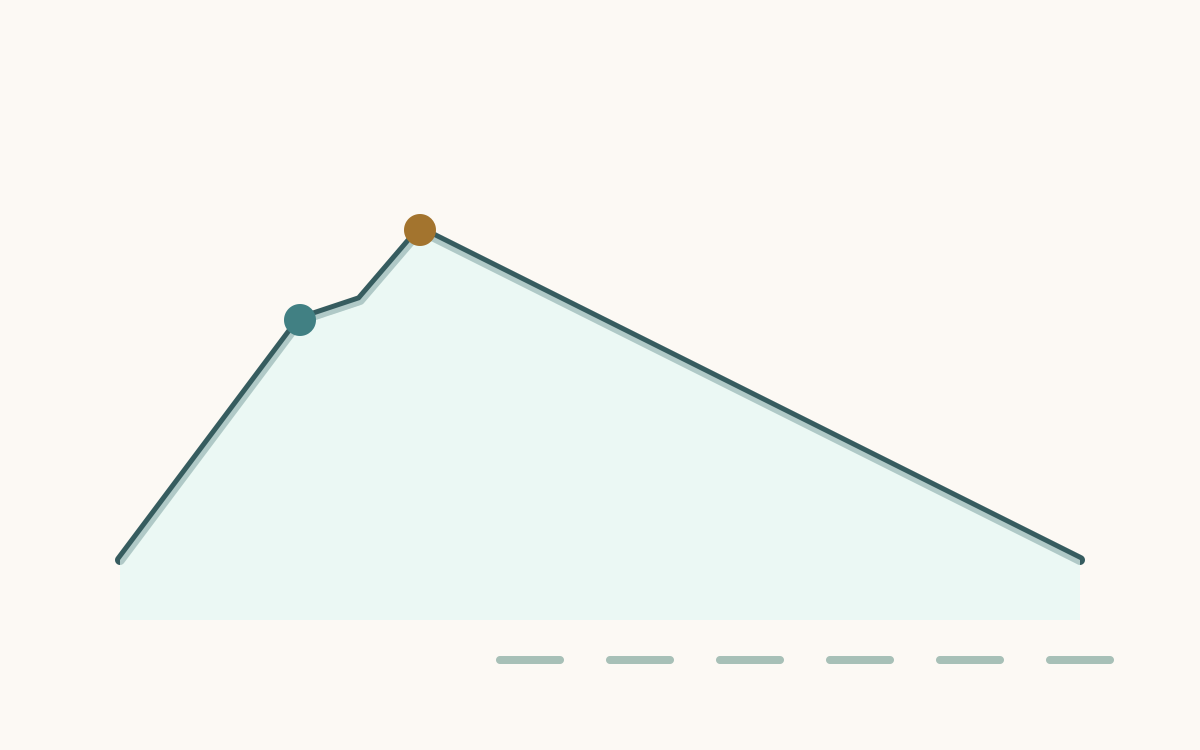
After crying, or when a weight has just been lifted, people often sigh without thinking. The sigh has an unusual shape: one breath in, a short second sip on top, then a long breath out. The physiological sigh turns that reflex into a practice you can use at any time.
What the research found
In 2023, a Stanford University team published a study in the journal Cell Reports Medicine in which participants did five minutes of a breathing practice or mindfulness meditation every day for a month. Those who did cyclic sighing, which stretches the out-breath, showed a larger improvement in positive mood than the meditation group. The participants were healthy adults and the study lasted a month, so the results may not apply to everyone.
How to do it
- Breathe in through the nose until your lungs feel full.
- At the top, take a short second sip through the nose.
- Breathe out slowly through the mouth, making the out-breath longer than the in-breath.
- When emotions run high, three rounds are usually enough. As a daily practice, continue for five minutes.
When to use it
You do not need to close your eyes. It works before a meeting, while waiting for a lift or after a message that makes you tense. Because there is no held breath, most people can do it. If you feel dizzy, stop and return to normal breathing.
The Practise tab in the ZJ app has a guided physiological sigh, with a shape that moves with your breath. Three rounds take about 30 seconds.